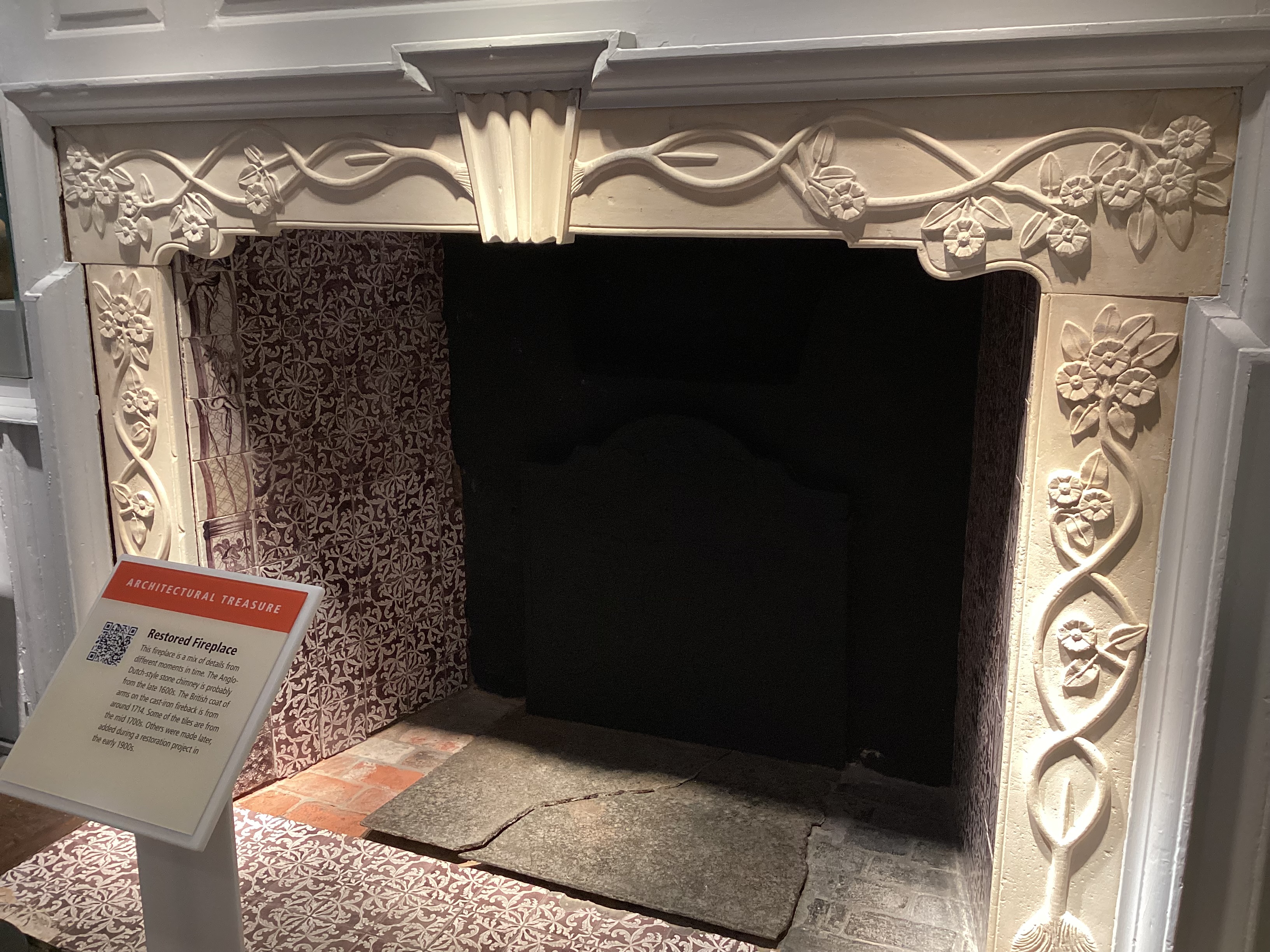
As Interpreters at Philipse Manor Hall, we are usually telling stories based on careful research from primary source documents. But occasionally, we also talk about how the things in our museum make us feel. Here’s an example.
The museum has six fireplaces. All are surrounded by elegant woodwork. Four are tiled with blue and white Delft tile — the iconic ceramic of The Netherlands. Another is retrofitted with a brown marble. (Two of our fireplaces once had French stone fireplace surrounds.) My favorite, however, is what we call the Great Britain fireplace.
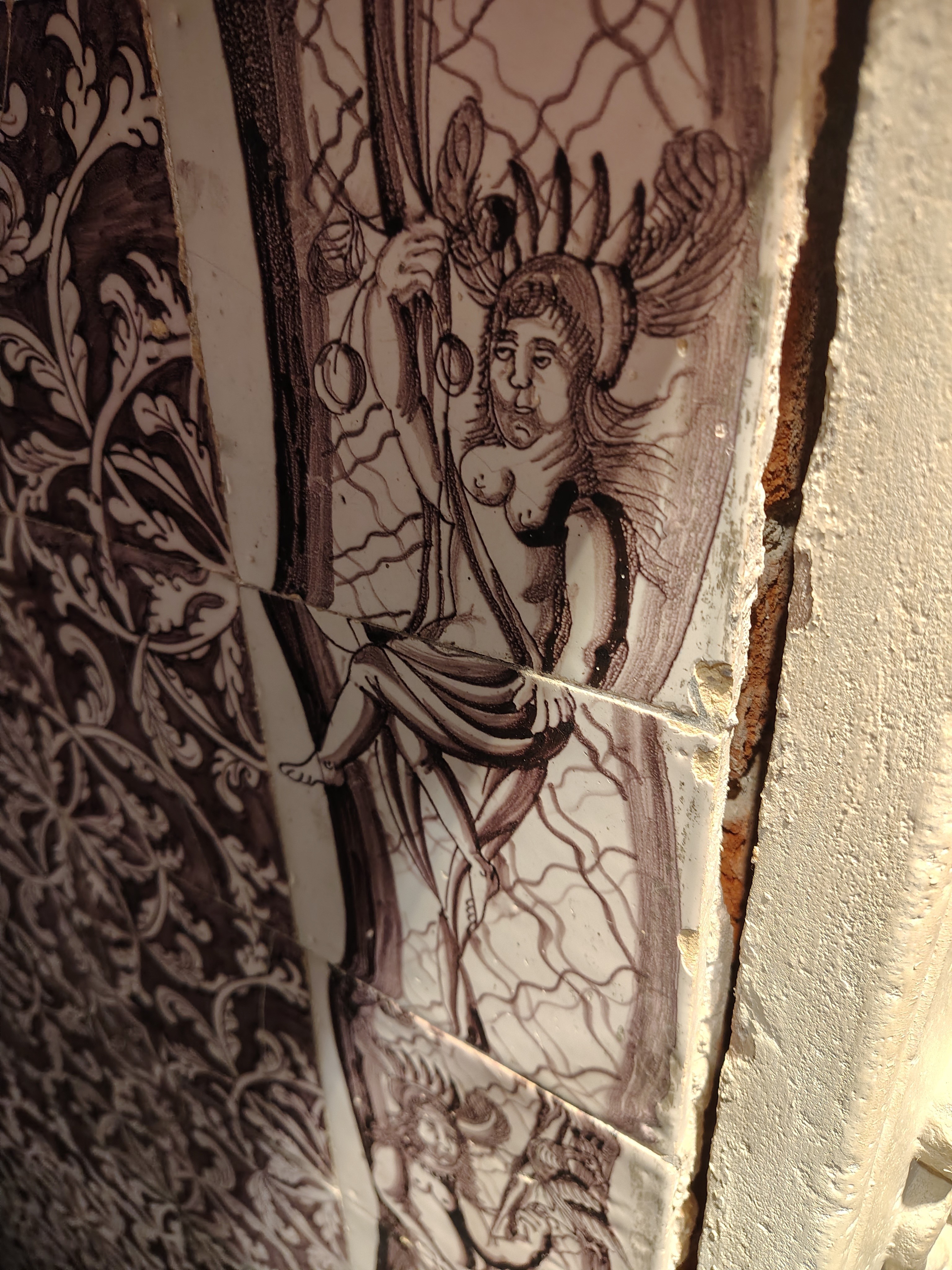
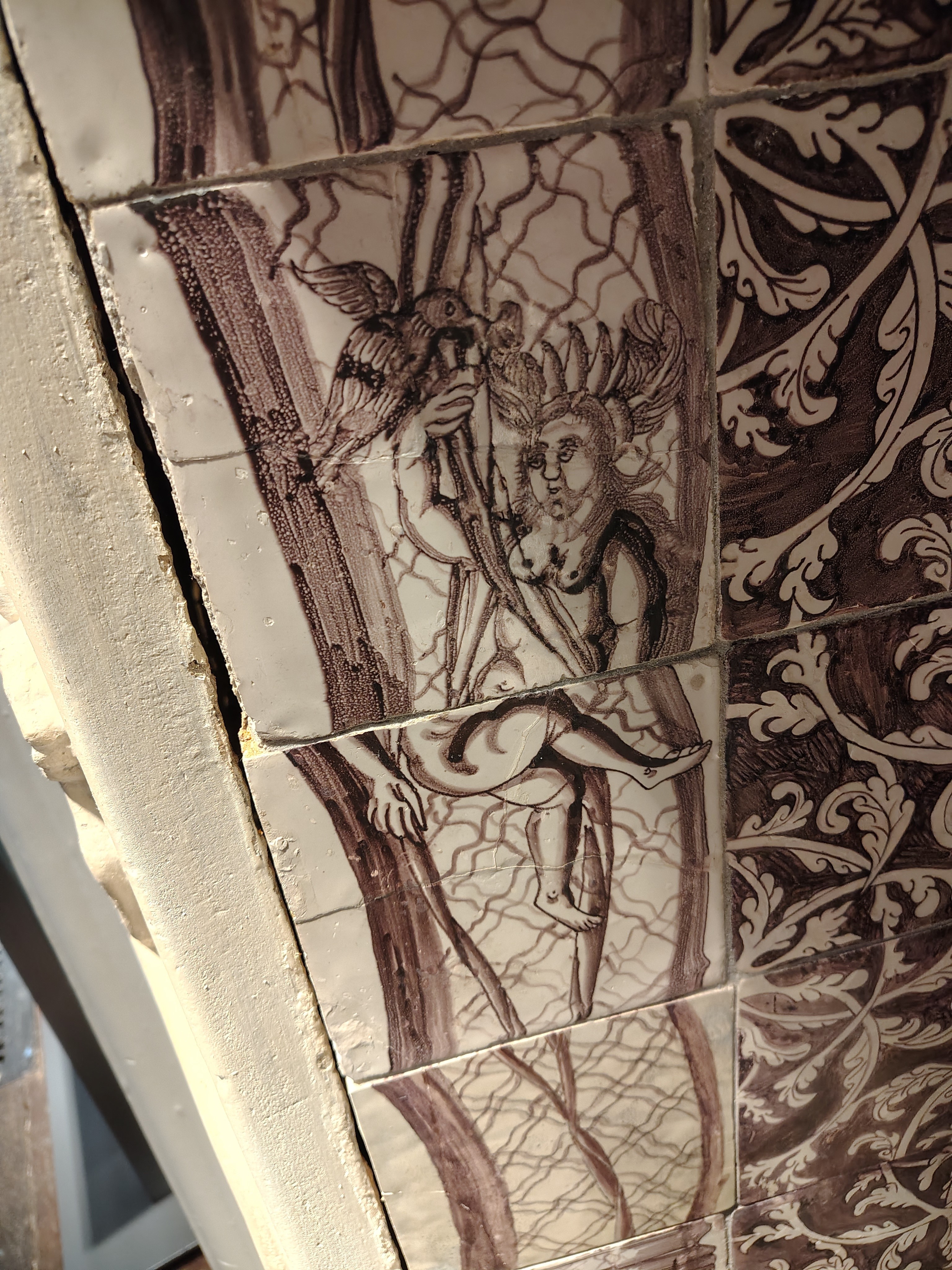
Located in the parlor of the oldest part of the house (1682-1685,) it is named after the cast iron fireback, which is emblazoned with the crest of the Royal Arms of Great Britain. In the Fireplace section of this website, we describe it as “a Baroque-style stone chimney piece with strap-work carvings and stylized flowers.” In contrast with tilework in the other fireplaces; its Delft tiles are a rich purplish brown, by nature of their manganese glaze. There are two types of motifs: a lush feather motif and a set of pictorials, with cavaliers on the bottom, and bare-breasted wilden, or Indigenous women, climbing above. The twining vines of the chimney piece are mirrored by the vines behind the wilden.
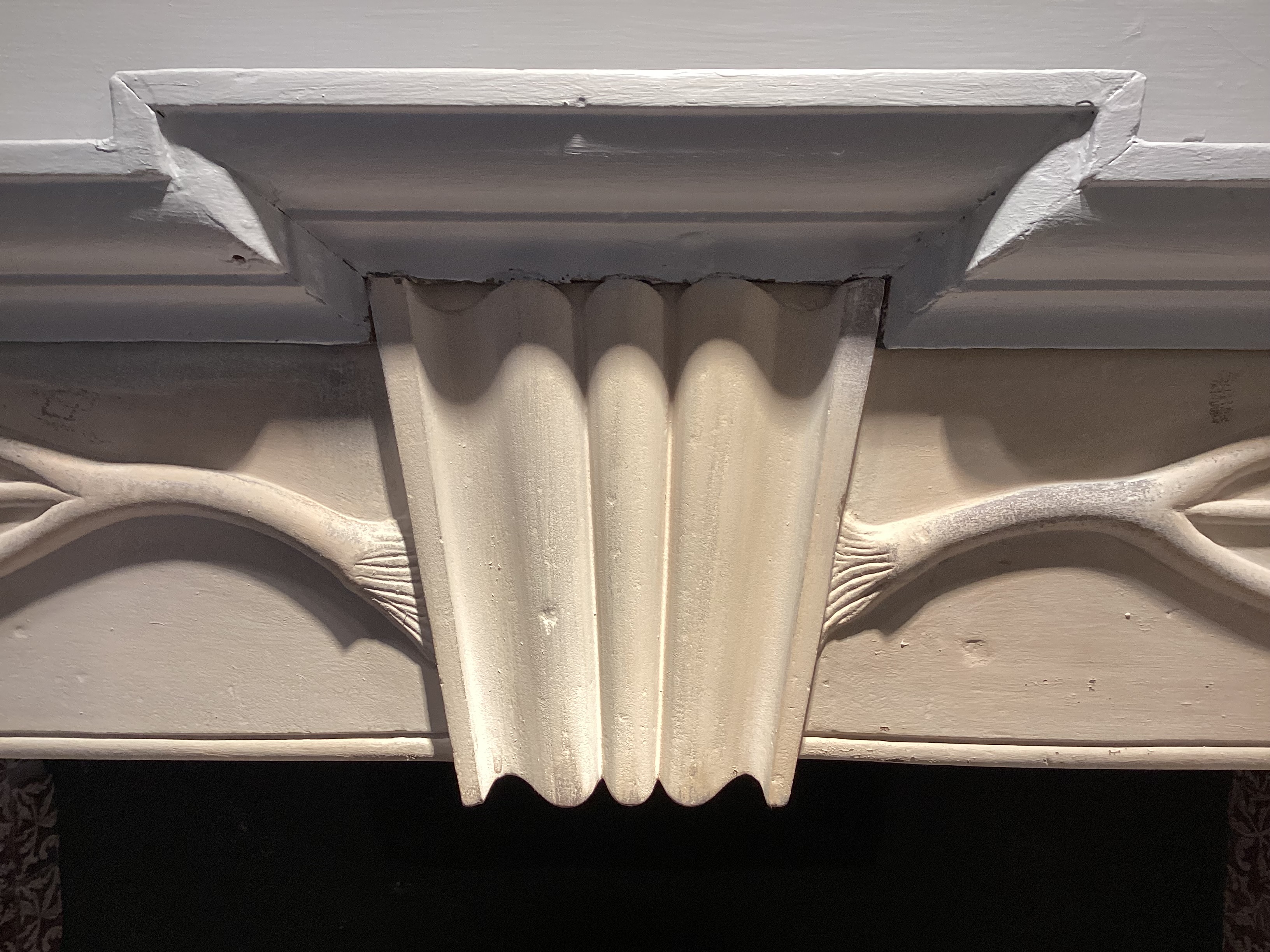
The surround is carved from three slabs of brownstone. The horizontal header has a fluted keystone, with intertwined vines, leaves, and blossoms on either side. Jambs on either side have the same vines and blossoms, but are anchored with an unusual, incised bulb or root.
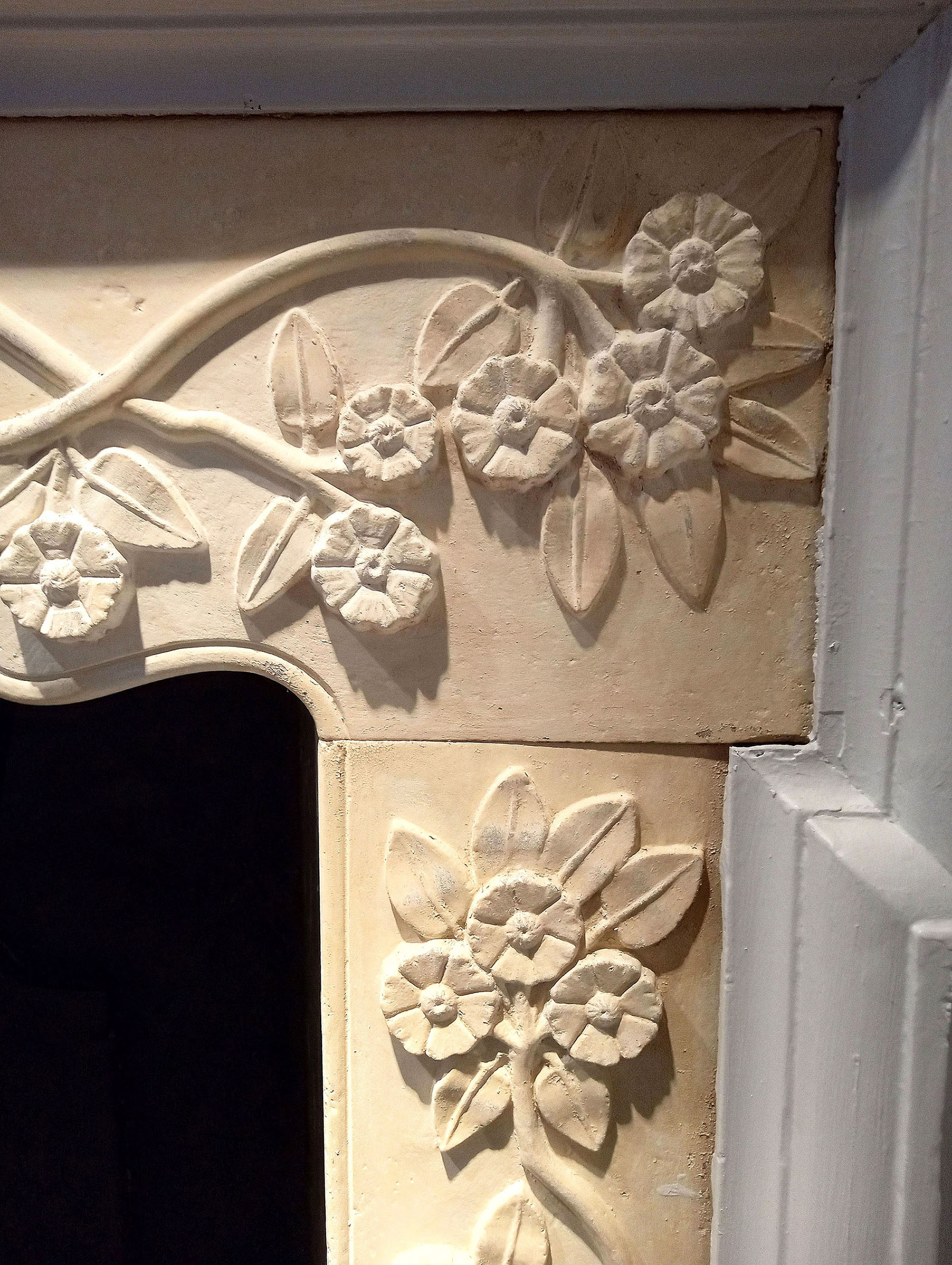
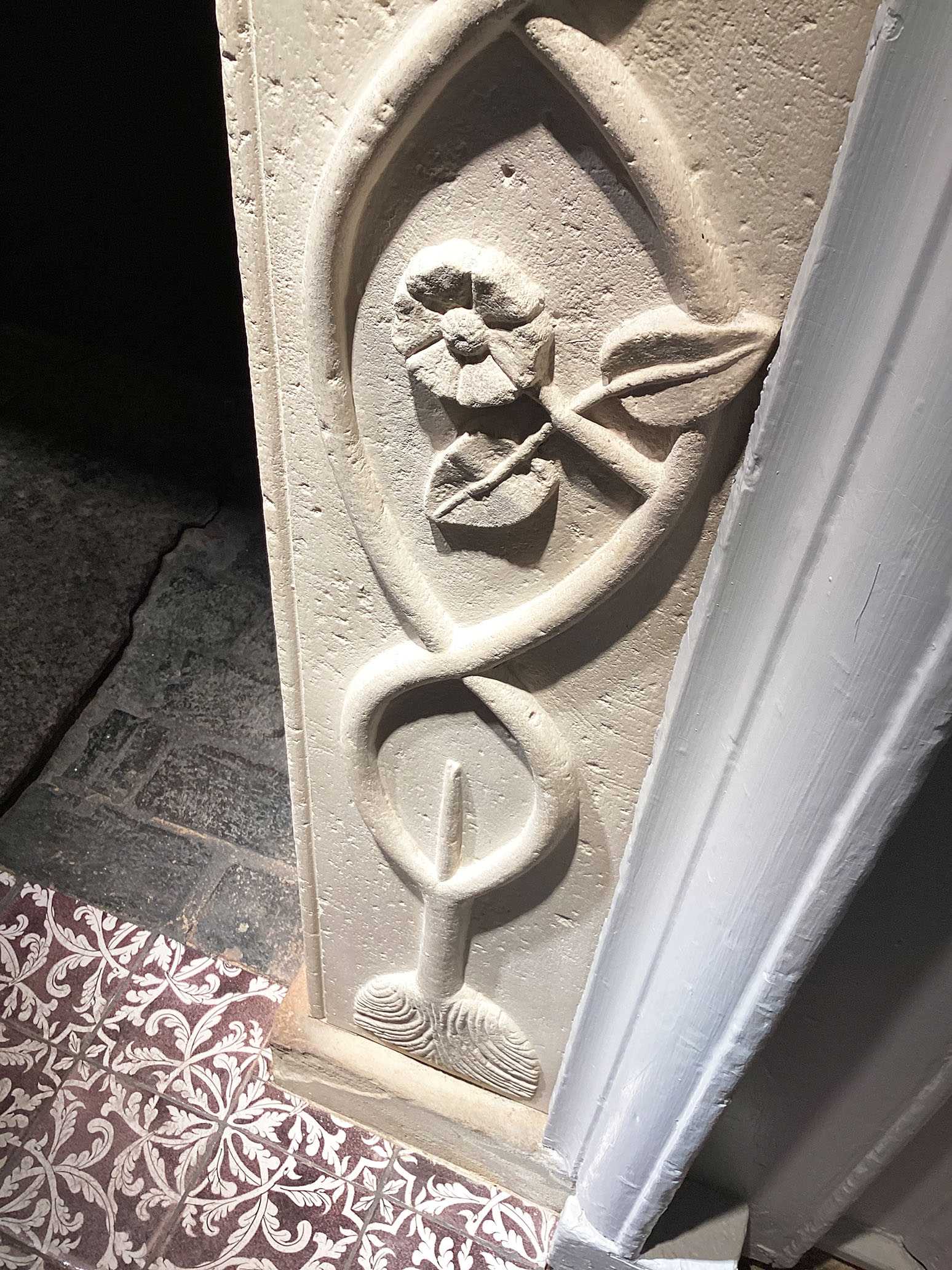
It is the root shape, in particular, that led me to feel that somehow, the entire carving doesn’t seem quite European.
At the time the Philipses were building the house, they were importing enslaved people from Africa, who we believe were integral in its construction. Could those enslaved individuals have been tasked with carving the stone around the fireplace?
My associate at Philipse Manor Hall, Keith Doherty (who is an expert in historical architecture) points to some other factors that make the carvings feel less than European. They exhibit “absolute symmetry, with each bloom and vine reproduced on either side as a mirror opposite.” Keith compared them to the organic forms of the wood carvings around the Manor Hall’s parlor fireplace, which evidence a discernable lack of mirroring from side to side. Keith also notes a “tendency to stick to the picture plane.” The carvings are all in the same dimension, where our parlor fireplace has some elements obscured behind other, closer elements.
I started to look at sculptural reliefs from Western Africa to see what forms they might have in common. This plaque from the kingdom of Benin—today’s Nigeria—on display at the Dresden Museum in Germany, shows sinuous plant forms and incised bulbs that reminded me of our carvings. It is attributed to the Master of the Leopard Hunt.

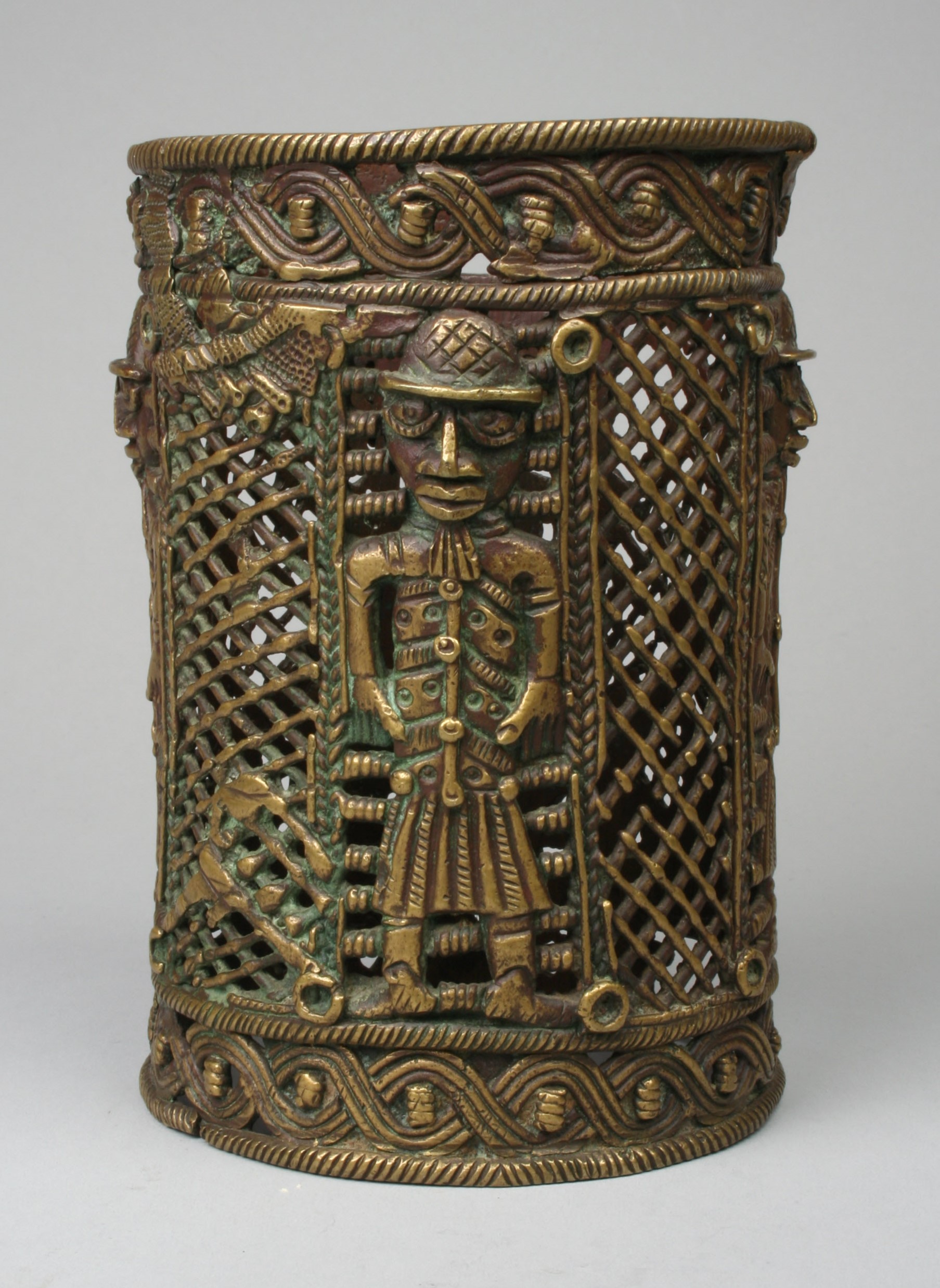
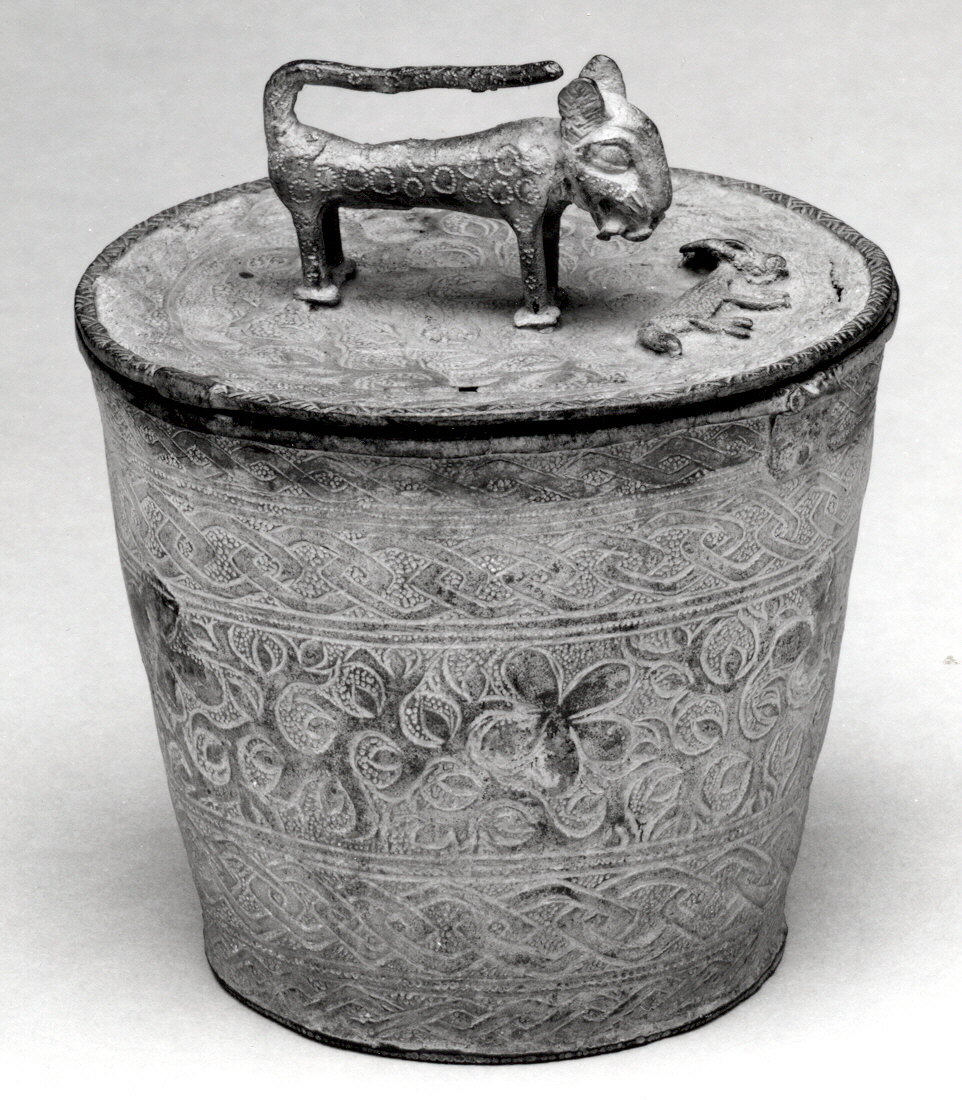
Pictured below is a brass bracelet, also from Benin, that uses rows of intertwined vine-like forms on top and bottom. This piece is in the Perls collection of the New York’s Metropolitan Museum of Art.
Other pieces of West African art feature floral motifs not too different from the ones on our fireplace. These are also from the Kingdom of Benin and are housed at the Metropolitan Museum.
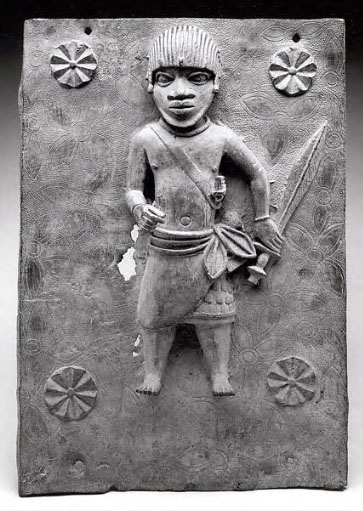
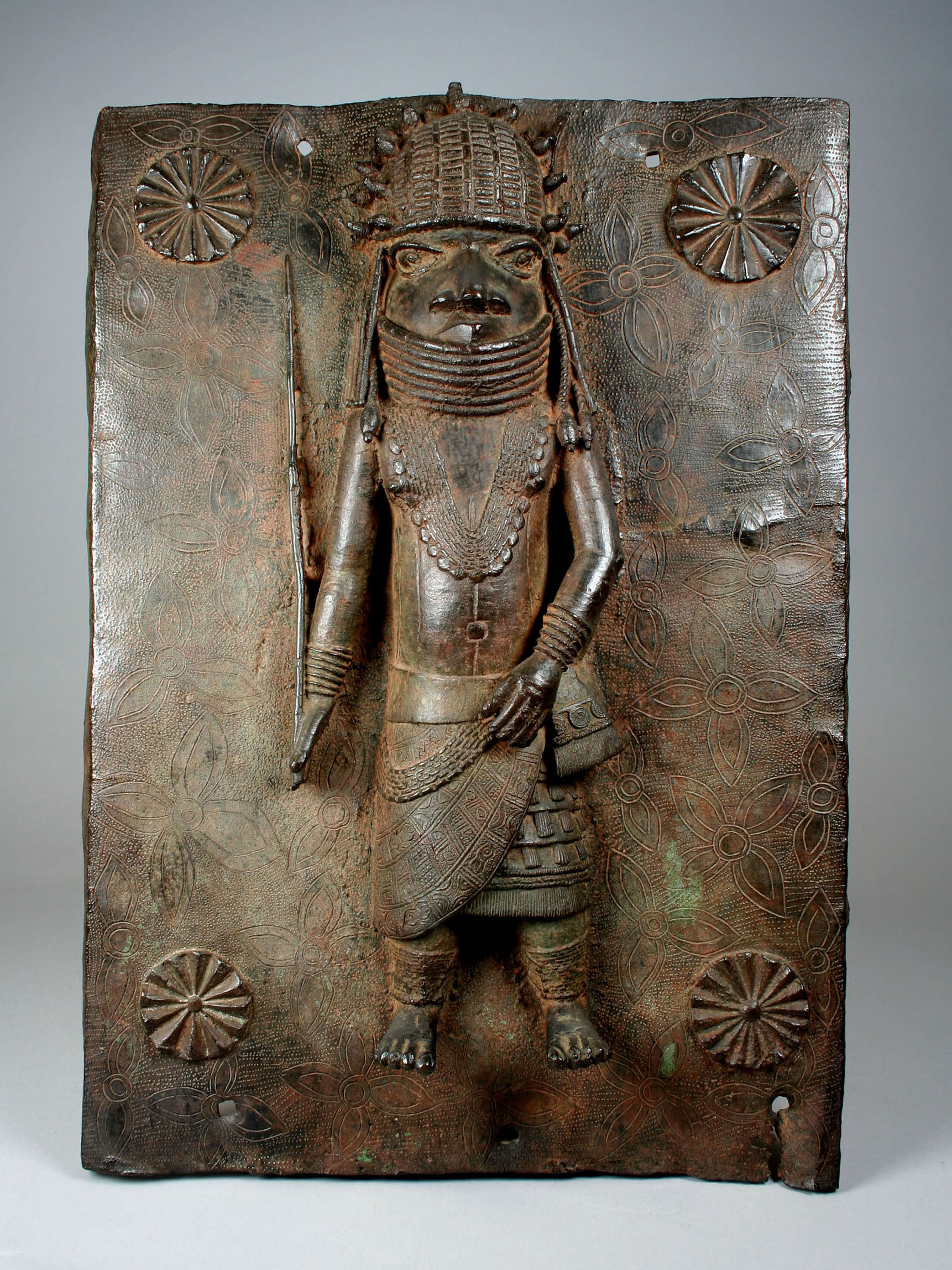
Below is a bronze plaque of an Obaa (king), or chief, from the last half of the 16th century. The rosettes in the corners of this Edo piece have the same feel as the flowers on our surround.
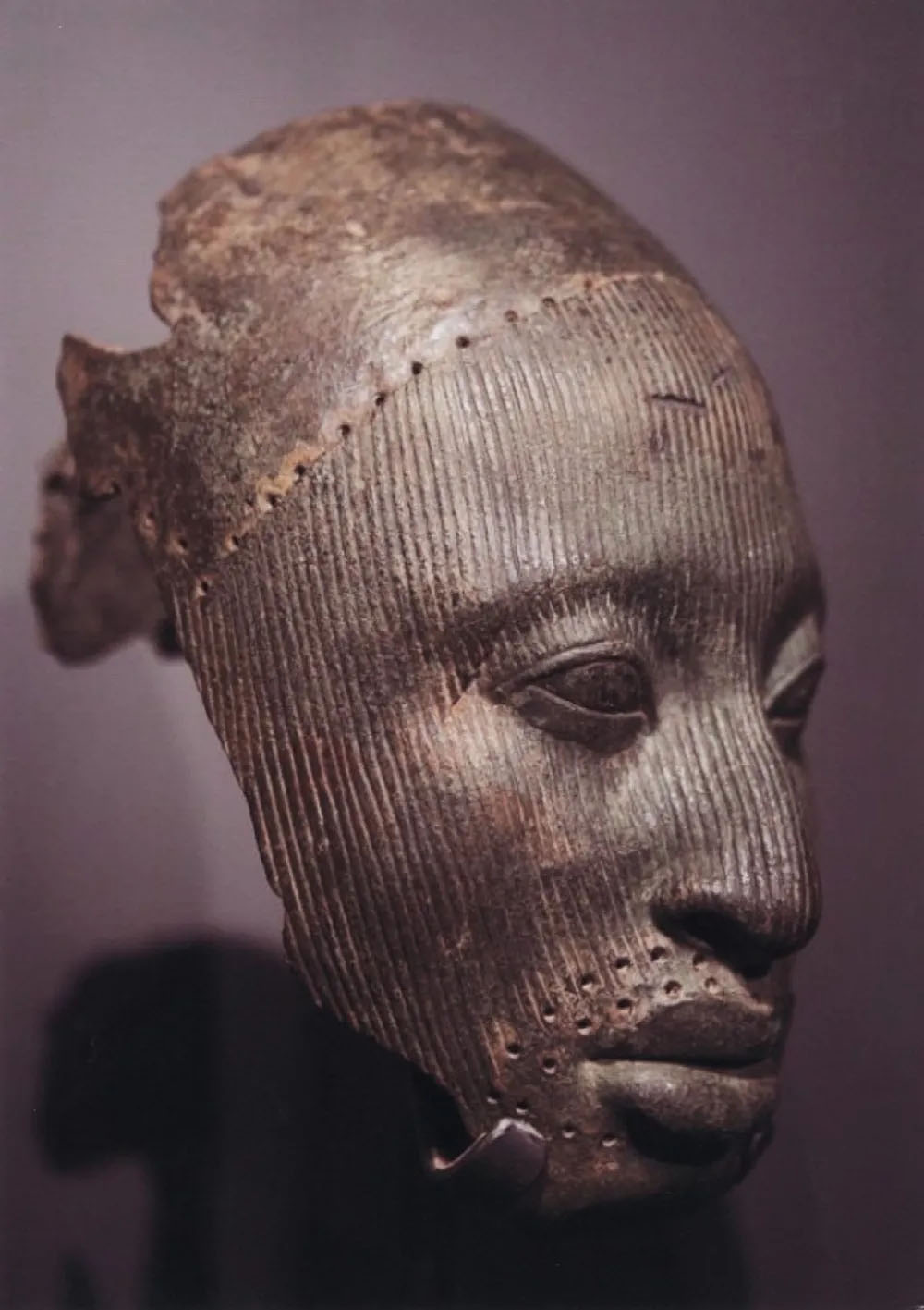
Several pieces I found in books of West African art had elements that mirrored the striated bulb shape on either side of the fireplace. I can see these textures in the West African bronzes such as this Beninoise head which was part of the Met’s collection before it was repatriated to Nigeria in the early 2020s.
Here is a bronze Ife sculpture from the British Museum with the same texture. This would probably have represented the lines incised in a ritual scarification that was popular in the 1800s.

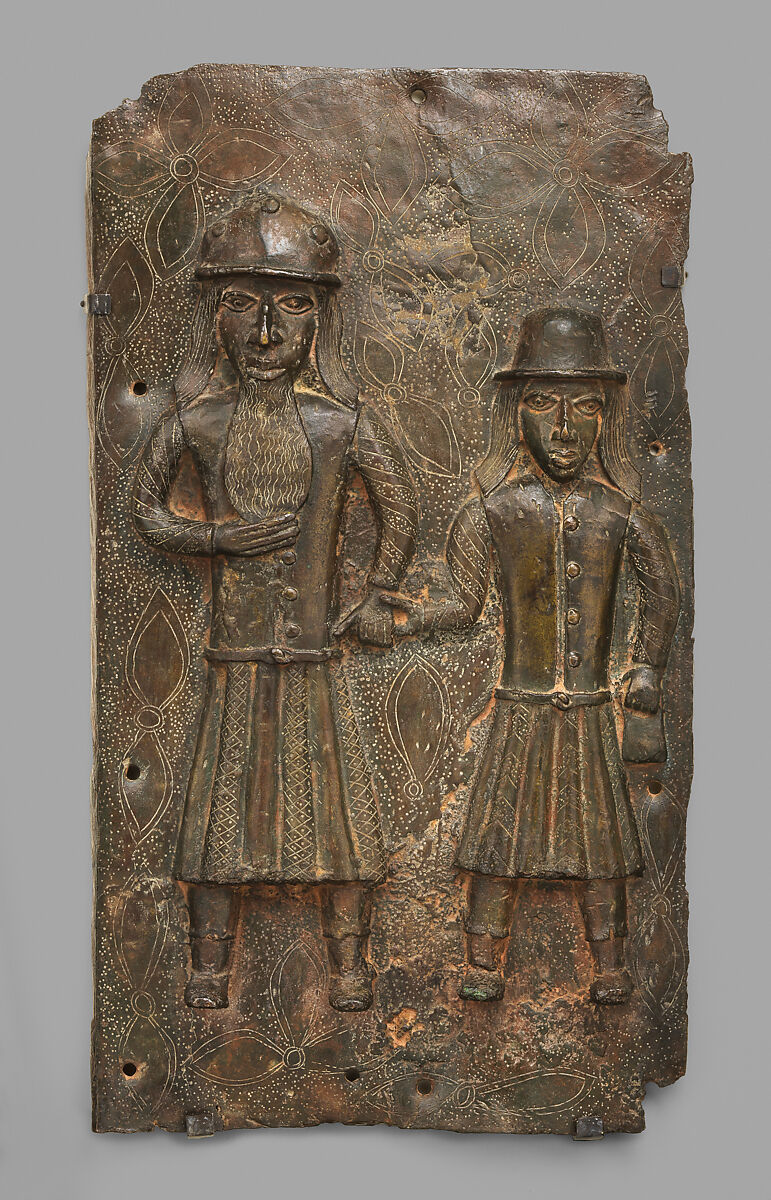
This brass plaque from Benin depicts two Portuguese merchants and was cast in the 1600s. It has a floral motif in the background that feels a bit like ours.
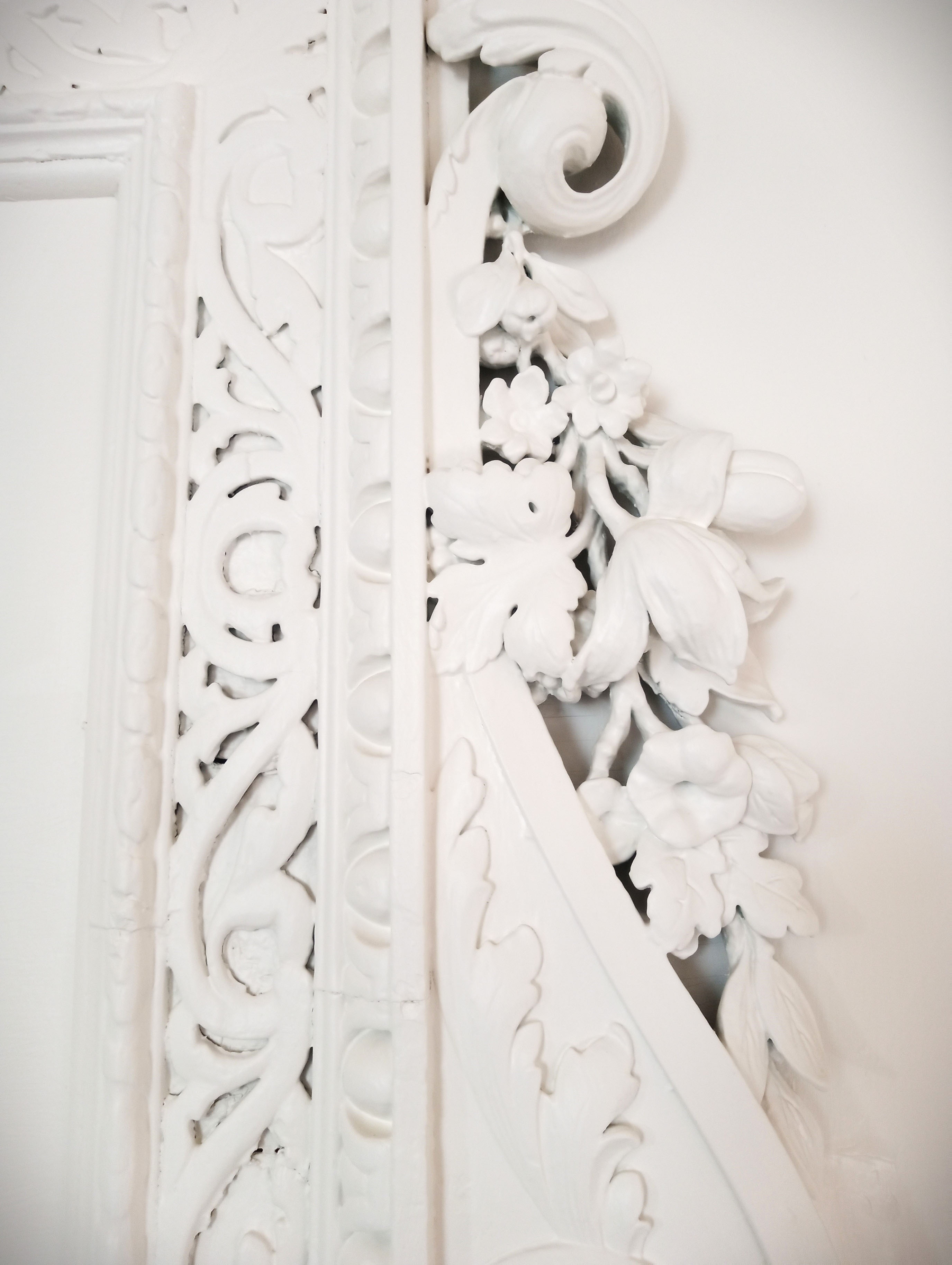
We looked at examples of European and early American stone mantels to see if we could find any similar ones, but they were rare. This 16th century French piece also has carved fines but is remarkably different from the one in Philipse Manor Hall.
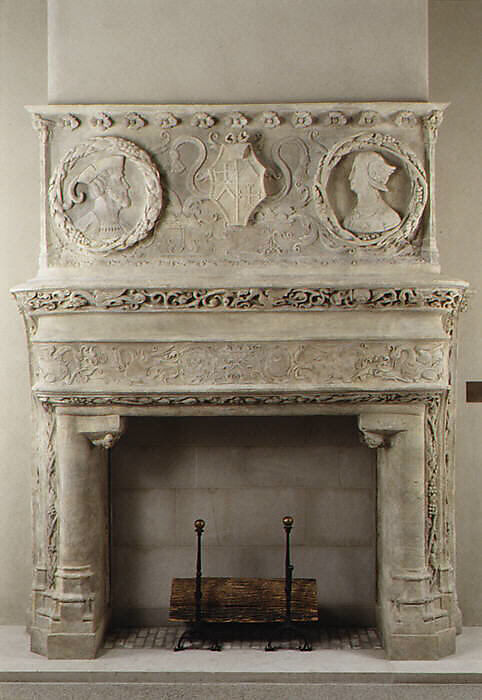
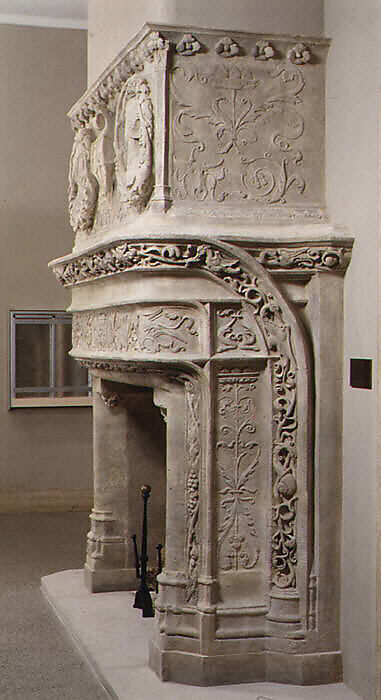

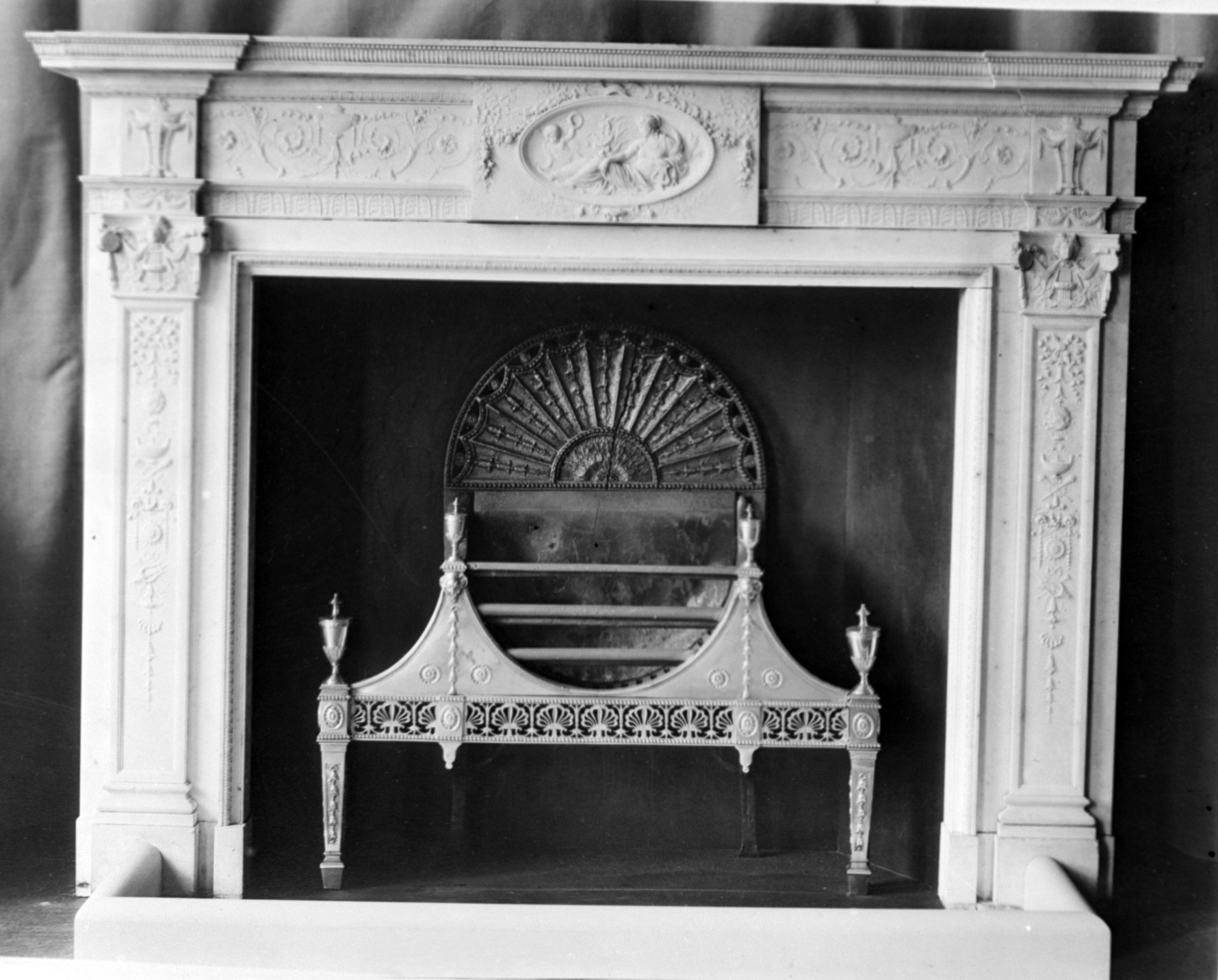
Although these European examples of stone fireplace surrounds are similar to the one at Philipse Manor Hall in that most have botanical features, including flowers and vines, the differences in carving styles are distinct.
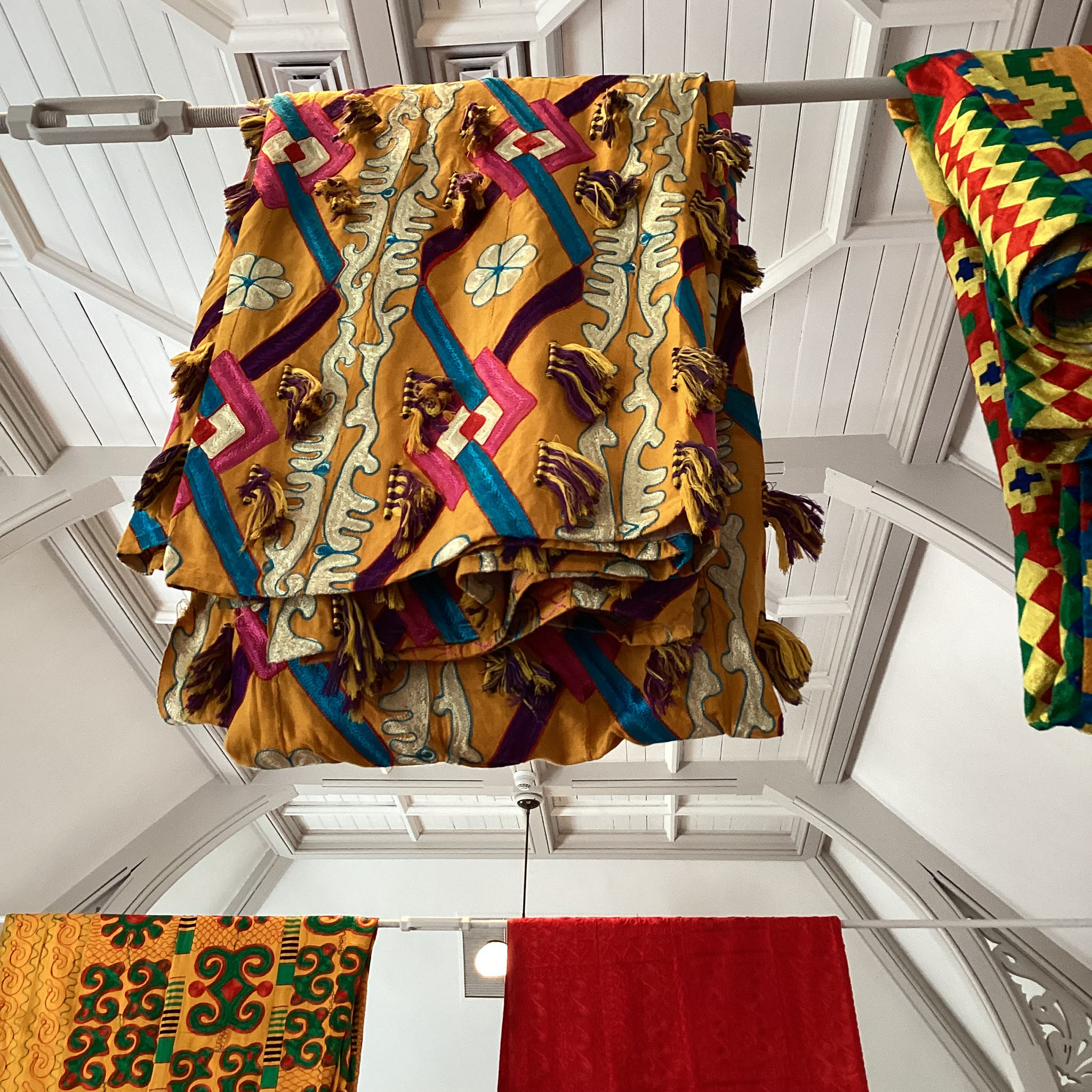
Once I started my exploration of the fireplace, I began to see similarities all over the place. We have had exhibitions at the Manor Hall of Ghanaian art and craft courtesy of the African Friends of the United States (AFUS). This textile reminded me of our stone carvings, particularly the sinuous forms and the flower motifs.
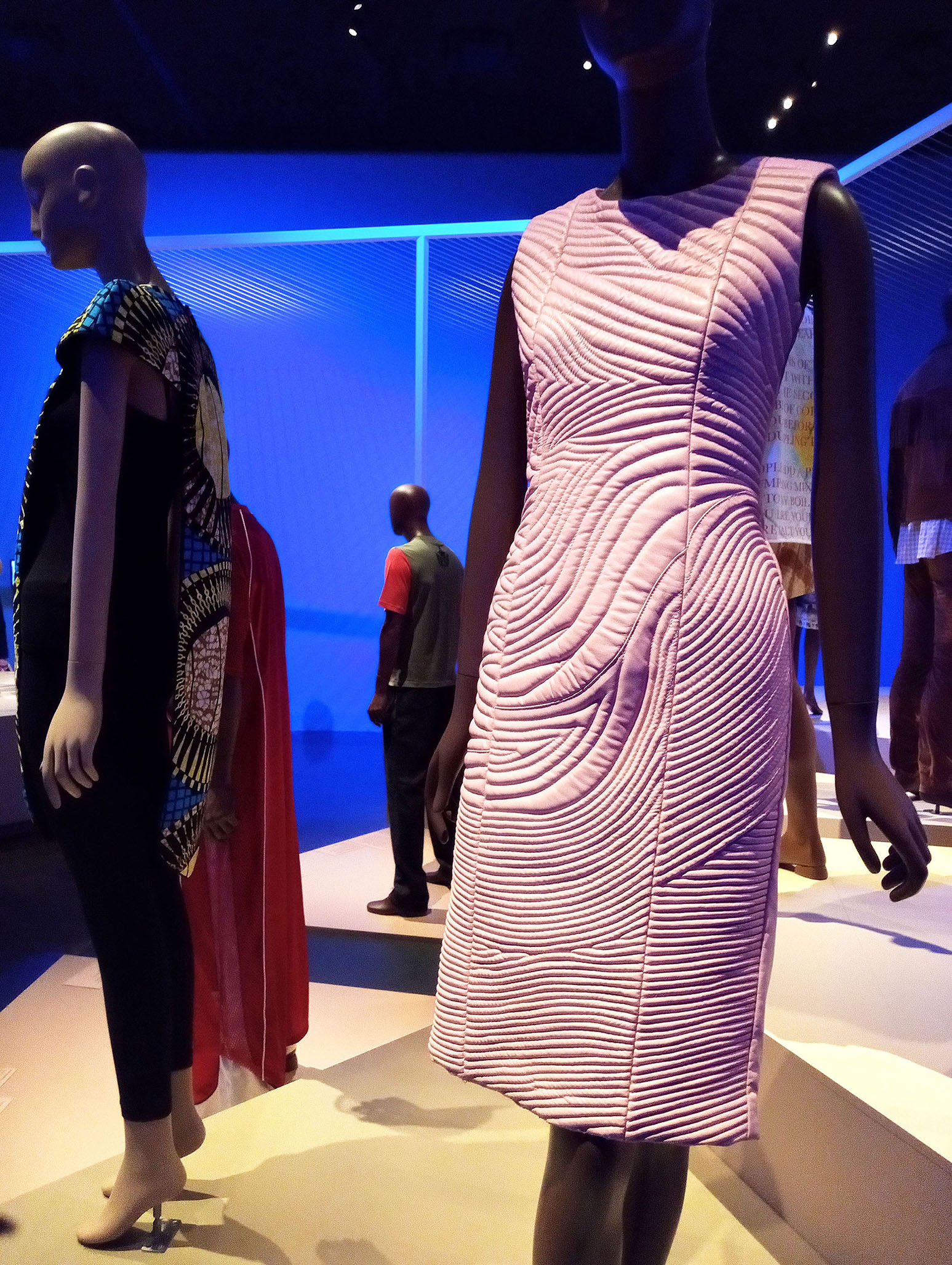
Later, I went to see an exhibition of clothing from the African diaspora, at Fashion Institute of Technology in Manhattan, and was struck by the pattern on this dress. It is described as “leather trapunto,” indicating the fine stitched detail that creates texture. The designer was inspired by ritual scarification for the motif.
Lately, I’ve been mentioning my theories to my tour participants. I’ve had a lot of positive feedback. One guest told me that the bottoms of the panels reminded her of peace lilies, and did a quick online search, then showed me a picture of a lily native to Africa - the calla lily.
.jpg)
Most recently, I was at home looking at a book on Thomas Day, a free man of African descent who had a successful carpentry business in North Carolina. One of the last photos in the book is a picture of Day’s grave marker which, although he died in 1861, was not erected until 1977. I was struck how similar the floral motif on the tombstone is to our fireplace. My suspicion is that it was based upon a nineteenth century form from the time of Day’s era. I hope to find more similar examples, as time goes on.
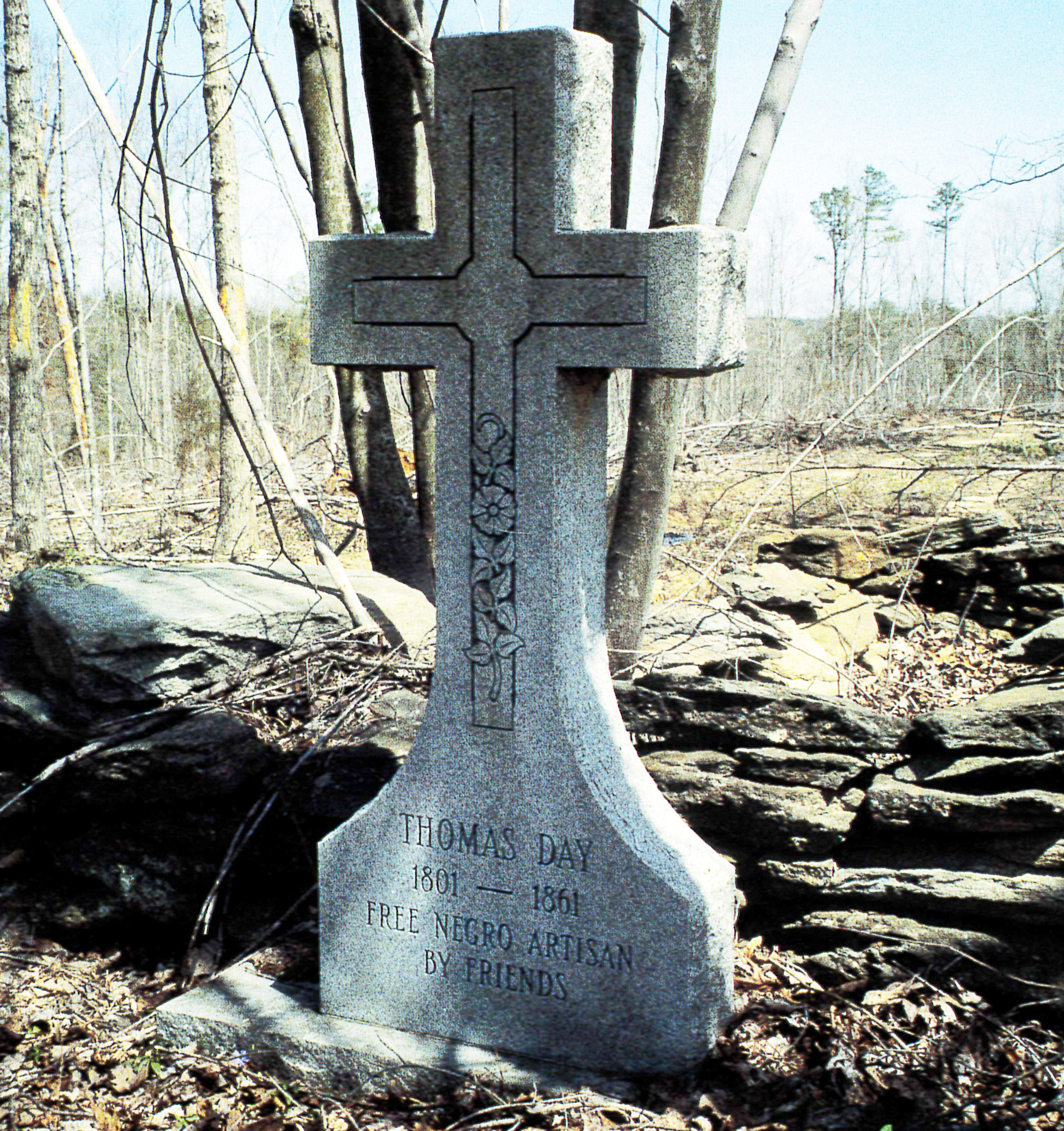
So, did African craftspersons carve our fireplace surround? We don't know for sure, but the carvings suggest someone who was not a trained European craftsperson. The completion of that oldest section of the manor house coincides with the arrival of the first Africans at the Manor in 1685.
What do you think? We welcome any thoughts our blog readers might have. I can be reached at david.lucas2@parks.ny.gov.
David C. Lucas is an interpreter at Philipse Manor Hall, giving public tours, working the front desk, and contributing to the website and social media. In his previous career, he spent years at Macy’s in Manhattan as a Graphic Designer and Art Director. Subsequently, he taught Design for several semesters at New York City University of Technology and worked at Rye Playland. He occasionally serves as a docent at the Hudson River Museum, and is the Trail Maintainer for the German Hollow Trail of the Catskill Forest.
